
Key Takeaways
- More than $1 million in federal and provincial funding will support three new trails at Mi'kmawey Debert Cultural Centre.
- The project includes a Healing Trail ending at a circle and lodge for Elders and Survivors.
- The accessible trails will connect visitors with more than 11,000 years of Mi'kmaw history.
Three New Trails Will Bring 11,000 Years of Mi'kmaw History Into the Visitor Experience
Imagine walking through a landscape where more than 11,000 years of Mi'kmaw history are part of the ground beneath your feet.
In Debert, Nova Scotia, three new educational trails will help visitors connect with that history. One will lead to something especially meaningful: a healing circle and lodge where Elders and Survivors can gather, reflect and heal together.
The trails are coming to the Mi'kmawey Debert Cultural Centre, backed by more than $1 million in federal and provincial funding.
And they are intended to be much more than places to walk.
Where the $1 Million Is Coming From
The federal government is contributing $942,000 through the Active Transportation Fund, while the Government of Nova Scotia is adding $100,000.
The investment was announced on October 29, 2026, during an event celebrating the start of construction at the cultural centre.
Alana Hirtle, Member of Parliament for Cumberland–Colchester, announced the funding alongside Dave Ritcey, Nova Scotia's Minister of Communities, Culture, Tourism and Heritage, and Tim Bernard, Executive Director of the Mi'kmawey Debert Cultural Centre.
Three Trails, One Much Bigger Purpose
The new trails will extend the cultural centre's educational experience beyond its walls and into the surrounding landscape.
Each trail will accommodate visitors with a variety of abilities, with seating provided for rest and reflection.
But the Healing Trail carries a particularly important purpose.
At its end, a healing circle and lodge will offer Elders and Survivors a dedicated place to come together, reflect and heal.
For the communities behind the project, this has been a long time coming.
Bernard said Mi'kmaw Elders, Survivors and communities have worked toward the cultural centre for over twenty years.
Hirtle said the trails will enrich visitors' learning experiences and bring the project closer to creating a dedicated space where Survivors can heal and Mi'kmaw culture can be shared with people from across Canada and around the world.
Why Ottawa Is Paying for Walking Trails
The investment comes through Canada's Active Transportation Fund, which supports new and expanded networks of pathways, sidewalks, bike lanes and trails.
At least 10 per cent of the fund's financing is allocated to projects that benefit Indigenous populations and communities.
The federal government also links the investment to the Atlantic Growth Strategy.
There is one funding condition: the federal contribution depends on the signing of the contribution agreement.
The Twikup Take
A million-dollar announcement about three walking trails might not sound like a major infrastructure story.
But at Mi'kmawey Debert, the significance goes far beyond the paths themselves.
The trails will connect visitors with a landscape holding more than 11,000 years of Mi'kmaw history, while providing a dedicated healing space for Elders and Survivors.
After more than twenty years of work by Mi'kmaw Elders, Survivors and communities, the project is moving another step closer to becoming reality.
These trails are not just about where visitors can walk. They are about the history they can discover and the space they can share for healing.
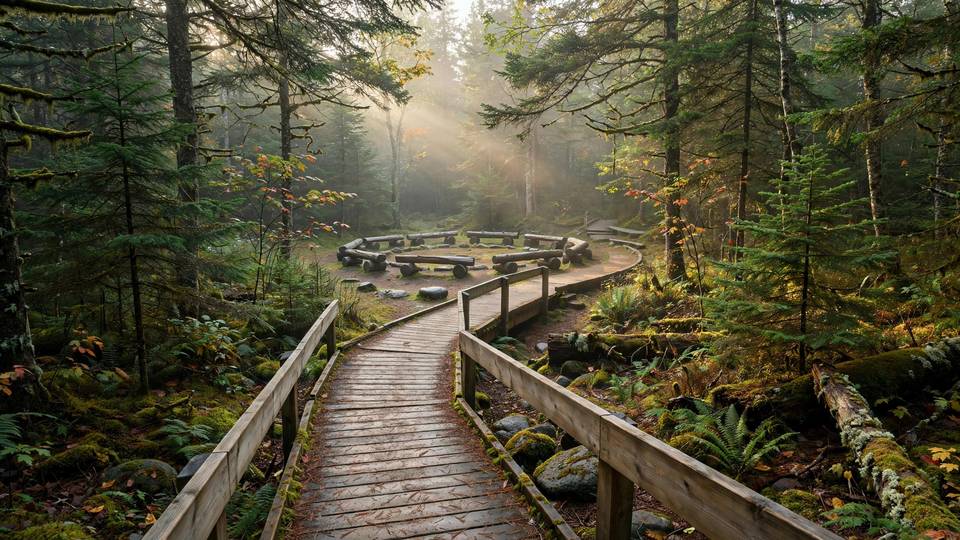
Image: AI-generated illustration.