
Before the Bell
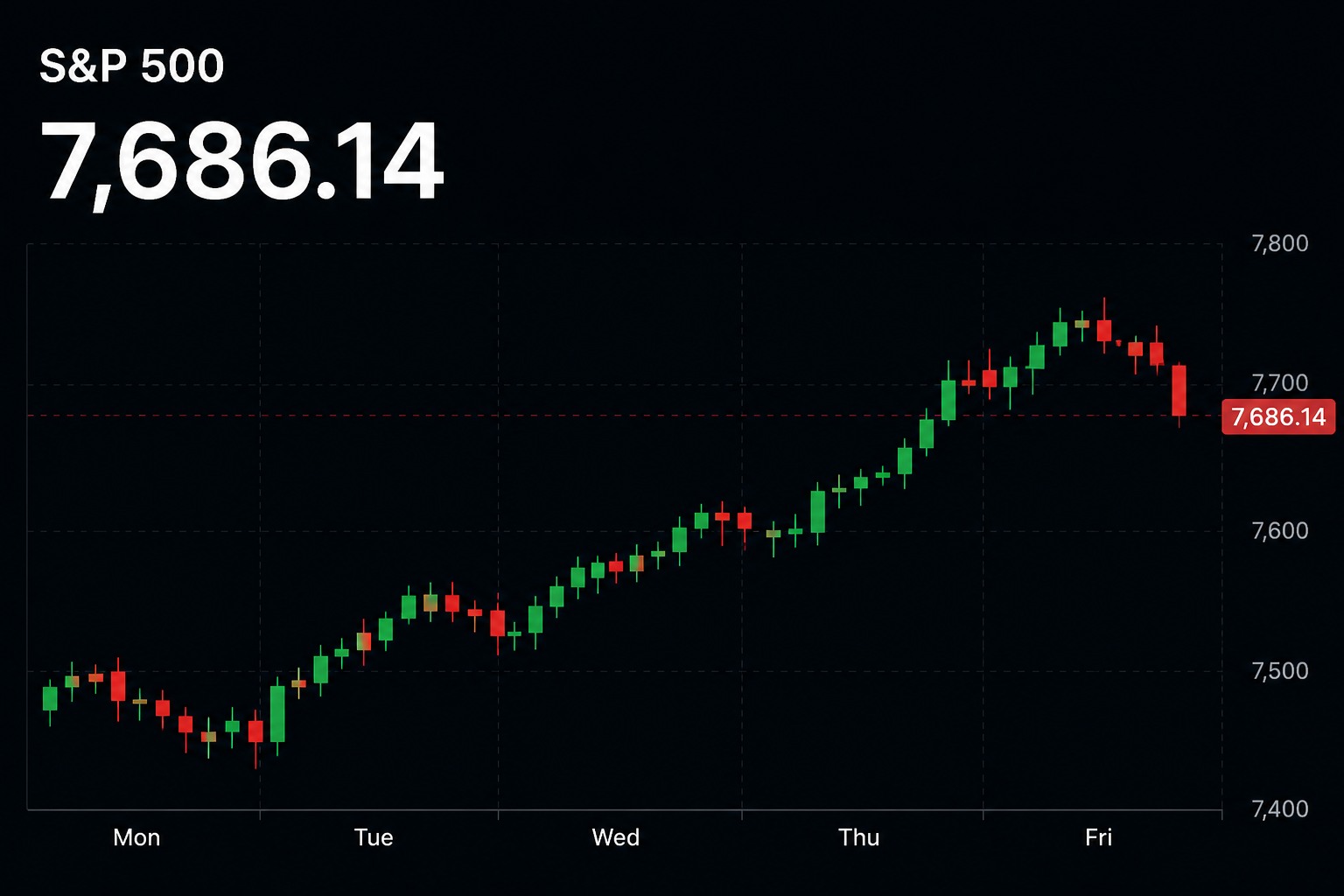
The S&P 500 is entering September with a strange problem.
The latest U.S. employment report showed nonfarm payrolls declined by 23,000 in July, with May and June payroll growth revised down by a combined 103,000 jobs.
You might expect weaker hiring to come with lower long-term interest rates.
Instead, the 10-year Treasury yield stood at 4.75% on August 31, up from 4.66% on August 26.
That leaves Wall Street with an uncomfortable combination:
Softer payroll growth. Inflation still above target. And expensive long-term money.
At 10:00 a.m. Toronto time today, investors get another clue.
Why 4.75% Matters
The S&P 500 isn't competing only with other stock markets.
It's also competing with bonds.
When Treasury yields are high, investors can earn more from relatively lower-risk government debt. Higher yields can also make the future profits of highly valued companies worth less in today's dollars.
That doesn't mean a 4.75% Treasury yield automatically sends stocks lower.
But it does raise the bar.
And that's why the bond market could be more interesting than the opening move in the S&P 500 today.
Weak Jobs Haven't Been Enough
July's employment report was clearly soft.
Payrolls declined 23,000, unemployment stood at 4.1%, and previous months were revised substantially lower.
But inflation hasn't disappeared.
July CPI was 3.4% higher than a year earlier, while core CPI increased 2.5%.
Federal Reserve Chair Kevin Warsh also pushed back against interpreting slower job creation as evidence that the economy is collapsing.
At Jackson Hole, he described the labour market as stable and emphasized that slower labour-force growth can mean the economy needs fewer new jobs than it once did.
Meanwhile, inflation still has to move convincingly toward the Fed's 2% PCE inflation objective.
That's why weak payrolls alone haven't solved Wall Street's interest-rate problem.
The Real Test Comes at 10:00 A.M.
At 10:00 a.m. Toronto time, BLS releases July's Job Openings and Labor Turnover Survey.
June had approximately 7.4 million job openings.
But don't watch only the JOLTS number.
Watch the 10-year Treasury yield immediately afterward.
If job openings weaken and yields fall, investors may finally get the lower-rate reaction normally associated with softer labour demand.
But if JOLTS weakens and the 10-year yield remains around the upper-4% range, something more interesting is happening.
The economy could be cooling without money becoming much cheaper.
For an S&P 500 trading at elevated valuations, that's the scenario worth paying attention to.
And Friday Could Be Bigger
Today's JOLTS report is only the first test.
At 8:30 a.m. Toronto time Friday, September 4, BLS releases the August employment report.
That gives Wall Street just a few days to answer two questions:
Is the labour market genuinely weakening?
And perhaps more importantly for stocks:
Will Treasury yields finally respond?
TwikUp Insight
Forget whether the S&P 500 opens green or red for a moment.
Watch 4.75%.
The unusual part of this market isn't simply that payroll growth has weakened. It's that the latest employment data are soft while long-term Treasury yields remain expensive.
If today's labour data weaken and the 10-year yield still refuses to fall meaningfully, September could begin with a problem stock investors weren't hoping for:
a softer economy without substantially cheaper money.
Disclaimer
This article is for informational purposes only and does not constitute financial or investment advice. Market prices and Treasury yields can change quickly. Investors should conduct their own research and consider their individual circumstances before making investment decisions.
Sources
- U.S. Department of the Treasury — Daily Treasury Par Yield Curve Rates
- U.S. Bureau of Labor Statistics — The Employment Situation — July 2026
- U.S. Bureau of Labor Statistics — Consumer Price Index — July 2026
- U.S. Bureau of Labor Statistics — Job Openings and Labor Turnover — June 2026
- U.S. Bureau of Labor Statistics — Schedule of Selected Releases — September 2026
- Federal Reserve Board — In Our Time — Keynote Remarks by Chairman Kevin Warsh at the 2026 Jackson Hole Economic Policy Symposium