
Key Takeaways
- The 2026 Ig Nobel Prizes recognized research ranging from cockroach milk and soil health to urinal splashback and 3D printing.
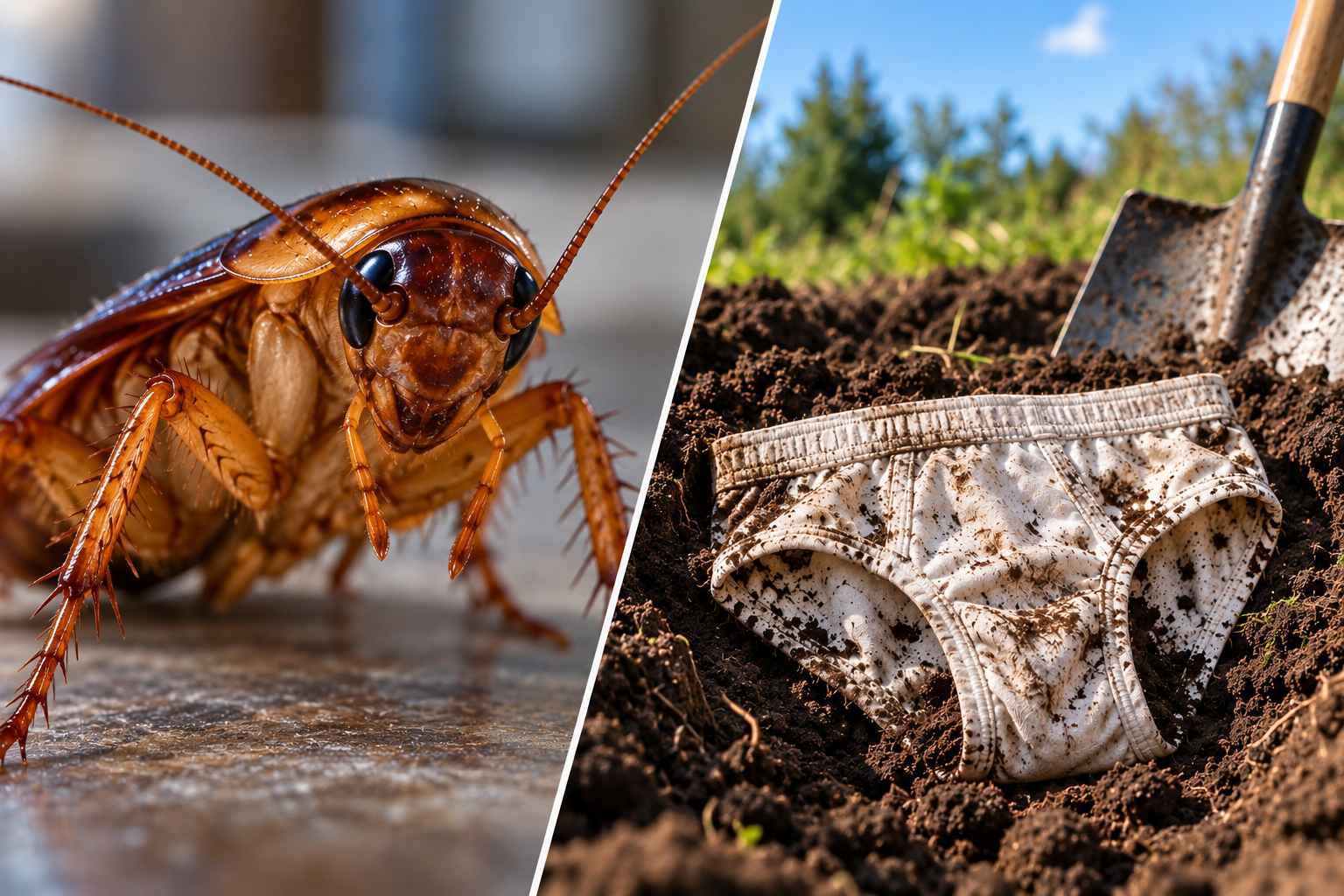
- A project buried 1,000 pairs of cotton underwear in more than 25 countries to examine biological activity in soil.
- The Biology Prize recognized snake-bite research even though its underlying paper was later retracted over animal-work concerns.
Science had quite a night.
Researchers have just won prizes for studying cockroach milk, burying 1,000 pairs of underwear, stepping on venomous snakes and trying to build a urinal that doesn't splash.
And somehow, every one of those sentences describes real scientific research.
The unusual studies were honoured at the 2026 Ig Nobel Prizes, held September 3 in Zürich, Switzerland.
The awards celebrate achievements that first make people laugh — and then make them think.
And this year's winners certainly delivered.
Yes, Cockroach Milk Is Real
Let's start with the obvious question.
Cockroaches make milk?
One unusual species does something surprisingly mammal-like.
Diploptera punctata gives birth to live young and produces a milk-like substance containing protein crystals that nourish its developing offspring.
Scientists studied those crystals at the atomic level.
The surprising part?
According to the Ig Nobel organizers, the milk proteins from these cockroaches pack three times as much energy as milk proteins from cows.
The research itself isn't new — the underlying paper was published in 2016 — but it has now earned its researchers the 2026 Ig Nobel Chemistry Prize.
So no, cockroach milk probably isn't coming to your morning coffee.
But scientifically, it's fascinating.
Then There Were 1,000 Pairs of Underwear
The Soil Science Prize might be even harder to explain at dinner.
Researchers organized a project that involved burying 1,000 identical pairs of underpants in more than 25 countries.
Then they waited two months.
And dug them back up.
There was a serious scientific reason behind all that underwear: soil health.
Cotton can be broken down by organisms living in the soil. Looking at how much of the underwear decomposes can therefore provide a remarkably visual way of examining biological activity underground.
Suddenly, disappearing underwear becomes scientific data.
Scientists Also Stepped on Venomous Snakes
Then there's the Biology Prize.
Researchers wanted to understand what makes venomous snakes decide to bite.
Their experimental method was unusual, to say the least.
While wearing safety boots, researchers repeatedly placed a foot on or near Bothrops jararaca pit vipers under different conditions to study their defensive behaviour.
The research examined factors including the snakes' size and age, temperature and time of day.
There is an important caveat, however: the underlying scientific paper was later retracted following concerns about its animal work.
Nevertheless, the experiment itself was recognized with the 2026 Ig Nobel Biology Prize.
Useful question.
Extremely unusual way of investigating it.
Physics Took on the Splashy Urinal
Canada also appears in this year's collection of wonderfully strange science.
The Physics Prize went to researchers from Canada, the United States, China and Saudi Arabia for theoretical and experimental attempts to design a splash-free urinal.
Yes, physics and differential equations were deployed against one of humanity's less glamorous problems.
The researchers studied how urinal geometry could reduce splashback and developed a design known as the Nautilus.
It's the kind of research that sounds ridiculous — right up until you realize how many public bathrooms could probably use it.
Mosquitoes Became 3D-Printing Equipment
And somehow, it gets stranger.
The Technology Prize recognized researchers who pioneered using mosquito proboscises as tiny, high-resolution 3D-printing nozzles.
They called the process “necroprinting.”
Instead of manufacturing an extremely small artificial nozzle, the researchers explored whether biological structures that already exist at tiny scales could do the job.
Apparently, even a mosquito can have a second career.
Weird Doesn't Mean Pointless
That's really the magic of the Ig Nobels.
This year's other winners included scientists who developed a more precise definition of kissing across species, researchers who studied why babies smell wonderful to their parents but teenagers apparently don't, and a decades-old aerodynamic investigation into how to blow your nose.
The Peace Prize even recognized research documenting that people can value friends who are mean to people they themselves dislike.
At first, the research sounds absurd.
Then you hear the question behind it.
And suddenly you're thinking about it.
Which means the Ig Nobels have done exactly what they're supposed to do.