
Key Takeaways
- NASA says Hubble’s orbit is gradually lowering because atmospheric drag is pulling the telescope toward Earth.
- NASA is seeking industry ideas for a mission that could raise Hubble’s orbit, upgrade it, or plan its disposal.
- NASA anticipates any Hubble servicing or disposal mission would need to happen by 2032.
Hubble Has Spent 35 Years Exploring Space. Now It's Slowly Falling.
For more than 35 years, the Hubble Space Telescope has looked deep into the universe, revealing distant galaxies and cosmic wonders.
Now, the legendary telescope has a problem of its own.
It's falling toward Earth.
Not tomorrow. Not next year. But slowly enough that NASA can see the deadline coming — and seriously enough that it wants help.
Hubble has no engine. It never did.
Space shuttles once gave it a boost during servicing missions. Without those visits, atmospheric drag is gradually pulling its orbit lower.
NASA's analysis predicts Hubble will likely re-enter Earth's atmosphere sometime in 2033 or 2034.
And NASA doesn't want to wait until then.
Three Possible Futures: Rescue, Repair or Goodbye
On October 29, 2026, NASA issued a Request for Information asking private companies what they could do to help.
There are three possibilities:
- Save it: Send a spacecraft to push Hubble into a higher orbit, potentially extending its scientific lifetime.
- Upgrade it: Service the telescope in space to improve its capabilities.
- Bring it home safely: Arrange a controlled atmospheric re-entry or move it into a disposal orbit when its mission ends.
NASA anticipates that any mission would need to happen by 2032.
Companies have until 3 p.m. EST on Monday, November 30, to respond.
NASA Isn't Ready to Say Goodbye
"Hubble still has important science ahead of it, and we should be looking at every reasonable opportunity to keep it delivering for as long as possible," said NASA Administrator Jared Isaacman.
"Extending Hubble's life would mean more discoveries, more science."
Nicky Fox, associate administrator for NASA's Science Mission Directorate, described Hubble as a national icon that has transformed humanity's view of the universe for more than 35 years.
She also pointed to rapid advances in commercial satellite capture and servicing technology.
That could give NASA options that didn't exist when the telescope first launched.
But this is not a confirmed rescue mission. NASA is gathering industry ideas, not announcing a spacecraft or selecting a company.
The Twikup Take
Hubble has spent more than three decades helping humanity understand the universe as a joint NASA–ESA project.
Now private spacecraft could help determine whether its next chapter brings more discoveries, a major upgrade or a carefully planned farewell.
The telescope that helped us see farther into space now needs someone to reach up and save it.
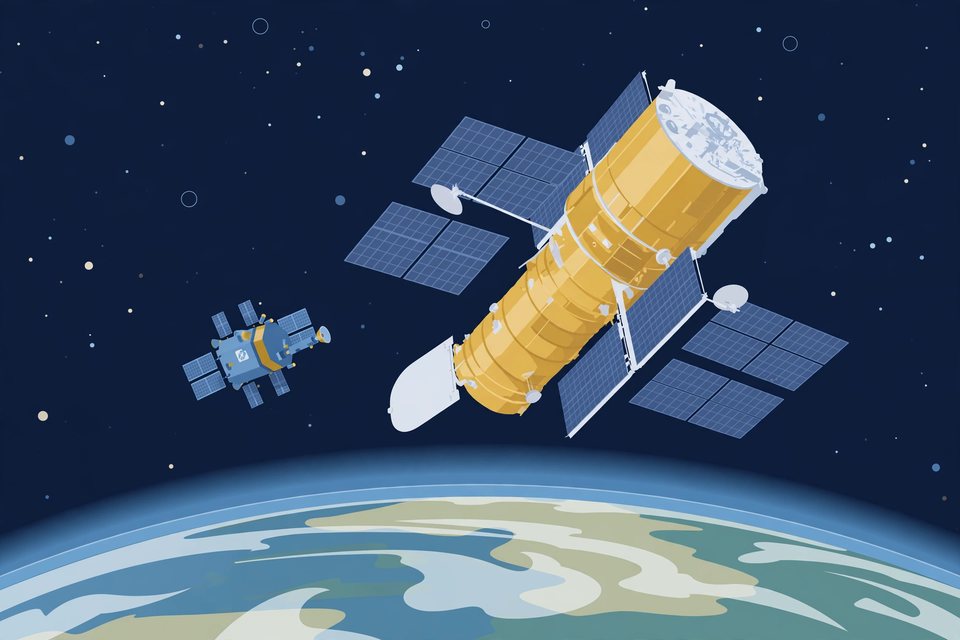
Image: AI-generated illustration.