
Key Takeaways
- Grain elevators can earn income from several handling services, not just long-term grain storage.
- Rail access, proximity to farming regions and available crop volumes can matter more than the size of a facility.
- Large elevator projects require substantial capital, regulatory compliance and careful management of grain quality.
Could Agricultural Warehousing Become an Investment Opportunity in Canada?
Canada's agricultural economy depends on Agricuitural Warehousing more than productive farmland and favourable harvests. Every year, enormous quantities of grain must be collected, dried, stored, cleaned and transported before reaching domestic processors or international buyers. The facilities handling this work could attract investors looking beyond traditional residential and commercial property.
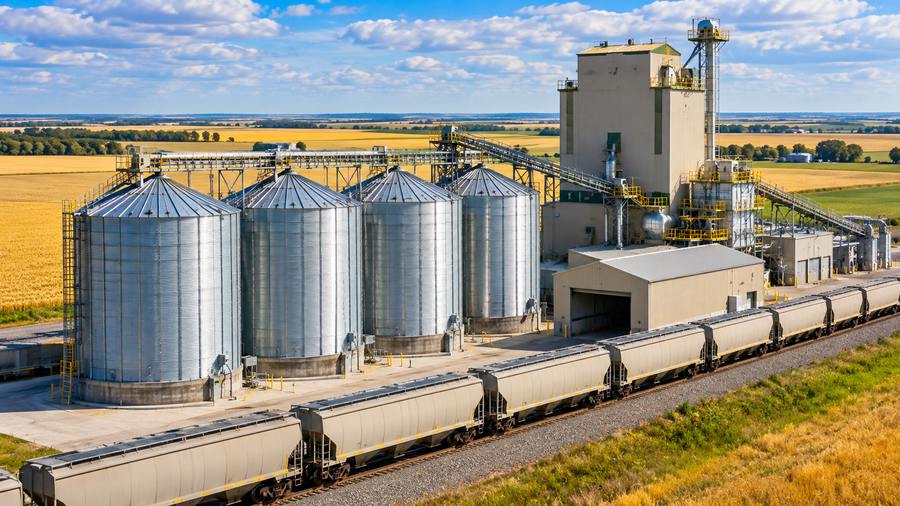
Agricultural warehousing investment in Canada includes grain elevators, commercial storage facilities, grain handling terminals and specialised infrastructure used to preserve agricultural commodities. These properties serve an essential purpose, but their investment potential depends on location, capacity, operating efficiency and access to transportation.
Why Does Canada Need More Grain Storage Infrastructure?
Agriculture and Agri-Food Canada's October 2026 outlook estimated total Canadian grain and oilseed production at approximately 95.9 million tonnes for the 2026–27 crop year. Moving that volume through the supply chain requires significant storage and handling capacity.
A January 2026 Grain Monitoring Program report identified 401 country elevators across Western Canada, offering nearly 9.4 million tonnes of storage capacity. The terminal elevator network included another 17 facilities with almost 2.8 million tonnes of capacity.
These figures demonstrate the scale of existing infrastructure, not an automatic shortage. Investors must investigate individual regions to establish whether additional capacity is commercially justified.
How Do Grain Storage Facilities Generate Revenue?
Grain elevators can earn money through several services. Operators may charge for receiving grain, handling and elevating it, cleaning, drying, blending and storing commodities.
For example, an elevator receiving grain with excessive moisture may charge for drying before it can be safely stored or shipped. Storage charges can generate additional income when grain remains at the facility for longer periods.
The Canadian Grain Commission publishes filed elevator charges for licensed operators. However, it does not set or approve those prices. Investors should examine local competitors, service charges and customer contracts rather than assume that every facility earns the same amount.
Which Locations Could Interest Agricultural Warehouse Investors?
Western Canada's major grain-producing regions deserve attention because Saskatchewan, Alberta and Manitoba have established farming, elevator and transportation networks.
However, proximity to farmland alone is insufficient. A facility needs reliable road access for farm deliveries, suitable handling equipment and commercially practical connections to railways or processing facilities.
Parts of Ontario and other agricultural regions may also offer opportunities, particularly where local producers need drying, conditioning or storage services. Northern Ontario has recently seen announced funding for grain-related infrastructure projects, including elevator construction and capacity expansion.
These examples show that agricultural storage investment is not limited to the Prairies, although each location requires its own demand assessment.
How Much Does It Cost to Build a Grain Elevator?
Grain storage projects can require substantial upfront investment. Canada's Competition Bureau has identified construction costs of approximately $40 million to $50 million for a grain elevator, alongside challenges involving suitable sites and transportation access.
The final budget depends on storage capacity, drying systems, conveyors, loading equipment, land, utilities, rail infrastructure and environmental requirements.
Investors should also account for ongoing expenses such as electricity, maintenance, insurance, labour, equipment replacement and grain-quality management. A large facility may look attractive on paper but struggle financially if annual throughput remains below its operating capacity.
What Risks Should Investors Examine Before Buying?
Grain storage is not a passive property investment. Moisture, temperature changes, insects and fungal growth can damage stored commodities. Proper aeration, monitoring and cleaning are essential to protect grain quality.
Licensing is another important consideration. Depending on the operation, grain dealers and primary, process or terminal elevator operators must obtain a Canadian Grain Commission licence or qualify for an exemption.
Transportation disruption, seasonal harvest patterns, competition, commodity volumes and customer concentration can also affect revenue. Investors should review the facility's operating history, equipment condition, customer relationships and licensing position before committing capital.
TwikUp's Perspective
Agricultural warehousing offers exposure to an essential part of Canada's food and export economy, but investors should approach it as an operating business supported by real estate rather than a conventional rental property. Strong returns require consistent grain volumes, efficient handling, competitive service charges and dependable transportation access.
Readers researching agricultural property opportunities can also explore our guides to Canadian farmland investment and land values and industrial outdoor storage investments. These property categories have different operating models, but all demonstrate why land use, infrastructure and local business demand matter when evaluating specialised real estate.
Disclaimer
This article is intended for educational and informational purposes only. Agricultural warehousing investments involve operational, financial, regulatory, environmental and market risks. Construction costs and potential income vary by location and facility. Readers should seek independent legal, financial, engineering and agricultural-industry advice before investing.