
Key Takeaways
- Monthly parking agreements can make revenue more predictable than relying entirely on short-stay customers.
- A parking lot's financial performance depends heavily on its location, access, customer mix and ongoing maintenance requirements.
- Land that appears suitable for parking may face zoning restrictions, licensing requirements or future redevelopment pressure.
Can a Parking Lot Become a Reliable Income-Producing Investment?
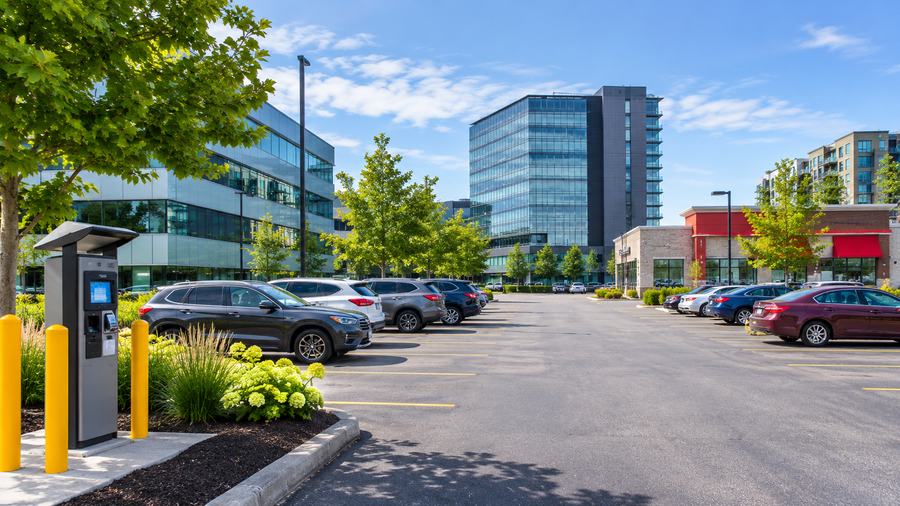
A vacant urban property might look unremarkable, but in the right location, it could serve commuters, residents, office workers and shoppers who need somewhere to leave their vehicles. This is the basic appeal of parking lot investment Canada: earning revenue from a relatively simple commercial property without managing residential tenants.
However, collecting parking fees does not automatically make a property profitable. Investors must purchase the right site, understand local demand and control the expenses that reduce monthly income.
How Do Parking Lots Generate Revenue?
Parking businesses generally earn money through hourly, daily and monthly arrangements. Short-stay parking can produce higher charges per occupied space, particularly near hospitals, entertainment districts, transport hubs and busy commercial areas.
Monthly agreements offer a different advantage. A commuter or nearby resident pays a fixed amount to reserve a space, giving the operator a more predictable revenue stream. Some facilities combine both models by reserving certain spaces for monthly customers while selling the remaining capacity to daily visitors.
Consider a hypothetical surface lot with 50 spaces. If 35 spaces are rented monthly for $180 each, the operator collects $6,300 per month. If another 10 spaces generate an average of $12 per day over 22 business days, they contribute $2,640.
That produces $8,940 in monthly gross revenue, or $107,280 annually, before expenses. These are illustrative figures, not verified Canadian market rates.
Which Locations Offer Better Parking Demand?
Location can matter more than the size of the property. A smaller lot near a hospital, university, office district or busy transit station may attract stronger demand than a larger facility in an area with abundant free parking.
Investors should examine nearby employment centres, residential density, public transport access, street parking restrictions and competing garages. It is also worth checking whether customers need parking throughout the day or mainly during evenings and weekends.
Seasonality matters too. A lot serving a summer tourism destination may experience weaker winter collections, while one near a hospital or established employment centre may have more consistent demand.
What Expenses Reduce Parking Lot Profits?
Land acquisition is only the starting cost. Owners may need to pay property taxes, insurance, lighting, security, snow removal, surface repairs, drainage maintenance, payment processing fees and staff costs.
A poorly maintained surface can create liability concerns and discourage repeat customers. Automated payment systems can reduce staffing requirements, but equipment installation, software subscriptions and repairs still need to be included in the budget.
Taxes also require attention. In Metro Vancouver, TransLink's Parking Rights Tax applies to paid parking rights, including monthly arrangements, and the rate is 29% following its August 2025 increase. This regional charge should not be confused with a nationwide parking tax. GST/HST obligations also need to be assessed separately.
What Legal and Zoning Checks Should Buyers Complete?
Before purchasing a site, investors should confirm that commercial parking is a permitted use under the applicable municipal zoning rules. Toronto, for example, requires a Commercial Parking Lot licence for paid parking lots and generally requires an approved zoning review before the application.
The rules can differ depending on the municipality and the arrangement being offered. A property owner should also review access permissions, easements, environmental conditions, drainage requirements and any restrictions affecting the land.
A future development plan can change the investment calculation. A site may generate parking income today but become more valuable as residential or commercial development land later. That possibility should be assessed separately rather than treated as guaranteed future profit.
TwikUp's Perspective
Investors exploring land-based income opportunities should also consider how different properties generate recurring revenue. Our guide to Manufactured Housing Investment in Canada 2027 examines how land-lease communities earn monthly site rent from residents who own their homes. Comparing this model with parking lot investments can help readers understand how location, occupancy, operating costs and land-use restrictions influence property income. At TwikUp, we believe investors should focus on sustainable cash flow and the long-term potential of the land rather than headline rental income alone.
Disclaimer
This article is for educational purposes only and does not constitute financial, legal, tax or investment advice. Parking lot profitability depends on property-specific demand, local regulations, operating costs and market conditions. Consult qualified professionals before purchasing or operating a commercial parking property.